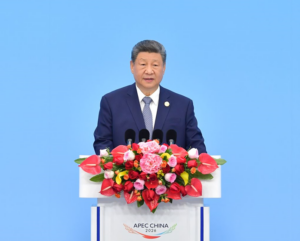
At a November 19, 2026, summit in Berlin, European leaders reaffirmed their support for Ukraine while seeking a role in peace talks that have been led by the United States. More than 40 participants attended the meeting of the “coalition of the willing,” hosted by the leaders of Germany, France and the United Kingdom.
Jared Kushner, US President Donald Trump’s son-in-law, and US envoy Steve Witkoff attended. Trump joined by phone. Kushner said he believed Russia had accepted the concept of postwar security guarantees for Ukraine modeled on NATO’s Article 5. That was Kushner’s account of Russia’s position, not a confirmed agreement. He also said Trump was open to providing guarantees, provided they served US interests and formed part of a broader security arrangement. According to a separate Xinhua report cited in the original coverage, Kushner said Russia had agreed to European participation in a multilateral negotiating mechanism.
In a joint statement after the summit, the leaders of Germany, France, the UK and Ukraine renewed their commitment to a comprehensive, just and lasting peace. They called for a European-led multinational force in Ukraine, made up of willing countries and supported by the US, as part of proposed security arrangements following a ceasefire. Russia has repeatedly rejected the idea of European military ties with Ukraine. President Vladimir Putin reiterated that opposition after a meeting with the leaders of China and the US, while saying Russia had invited European officials to Moscow to discuss a possible format for talks.
The EU had agreed on November 13 to form a European negotiating team comprising EU institutions and the coalition’s E5 countries: the UK, France, Germany, Italy and Poland. French President Emmanuel Macron said on November 19 that Ukraine’s request to join NATO should be reconsidered. German Chancellor Friedrich Merz urged all 27 EU members to help fund Ukraine, citing a projected €70 billion shortfall in 2027. On November 18, the EU proposed, rather than approved, an additional €45 billion in loans to Ukraine.