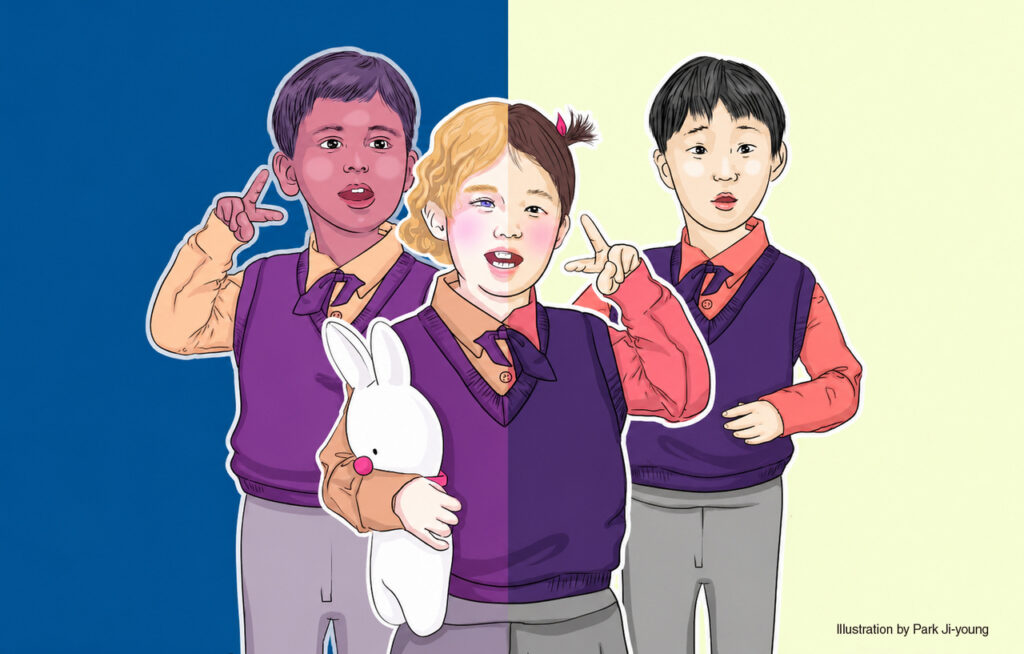
In South Korea, a family may qualify as “multicultural” even when every member is a Korean citizen. The designation can affect access to child care and other support, though eligibility rules differ by program. As reported on November 20, 2026, the question of who should receive that support remained under debate.
The Multicultural Families Support Act, enacted in 2008, covers families formed by a marriage immigrant and a Korean citizen. It also covers certain families whose members already hold Korean citizenship—for example, a family with one naturalized parent and a spouse and children who acquired Korean citizenship at birth. Under the Nationality Act, a child acquires Korean citizenship at birth if either parent is a Korean citizen at the time.
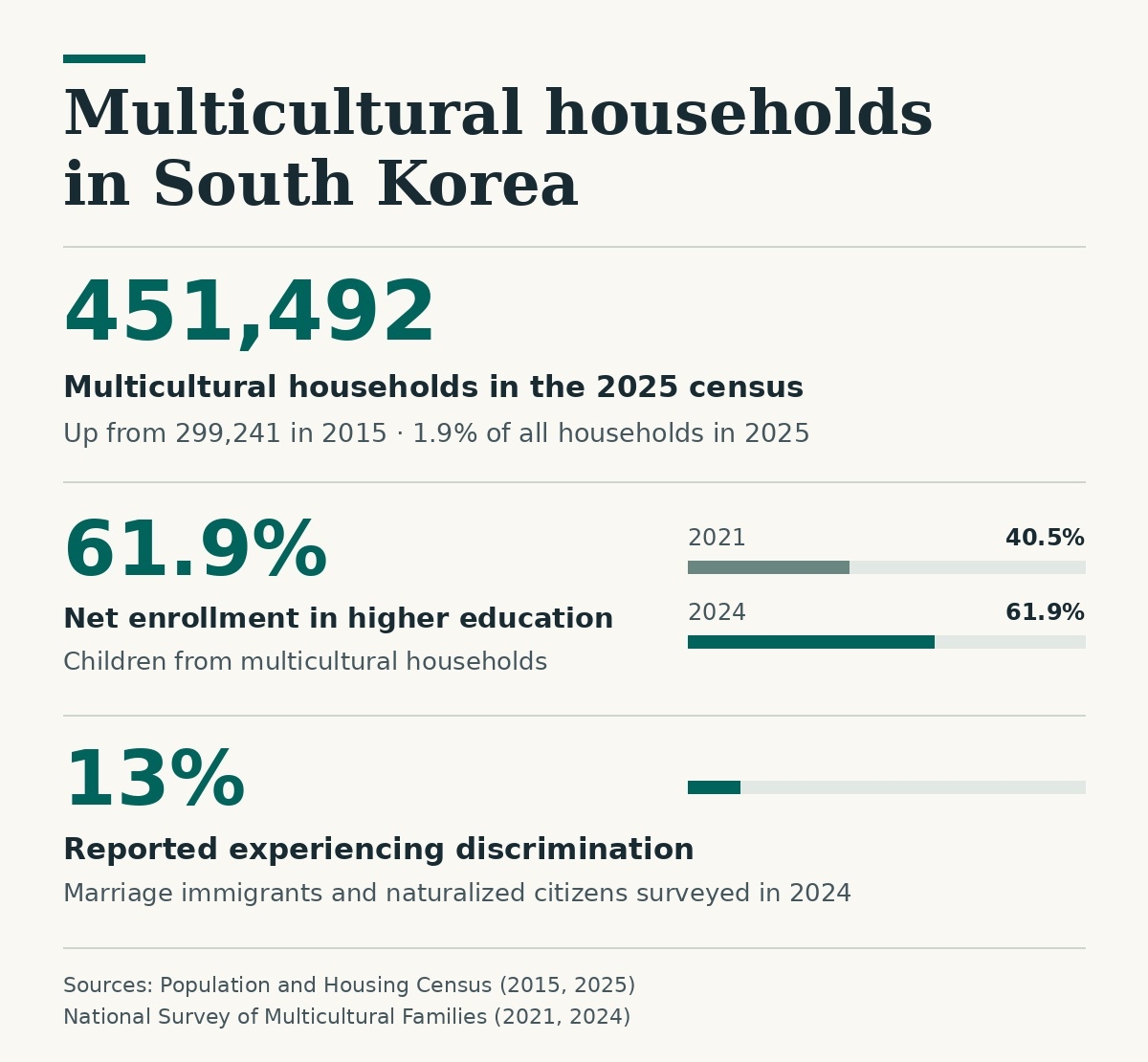
The 2025 census counted 451,492 multicultural households, up from just under 300,000 a decade earlier and accounting for about 2 percent of all households. Its count includes households with marriage immigrants, people who acquired citizenship through naturalization or legal acknowledgment of parentage, or their children.
Under national rules, young children from families covered by the support act receive first-tier priority for day care enrollment, alongside children from some eligible low-income and single-parent households. Other measures have different conditions: education subsidies for school-age children are income-limited; some universities offer separate admissions tracks; and certain local housing programs and lower-rate loans have their own eligibility requirements.
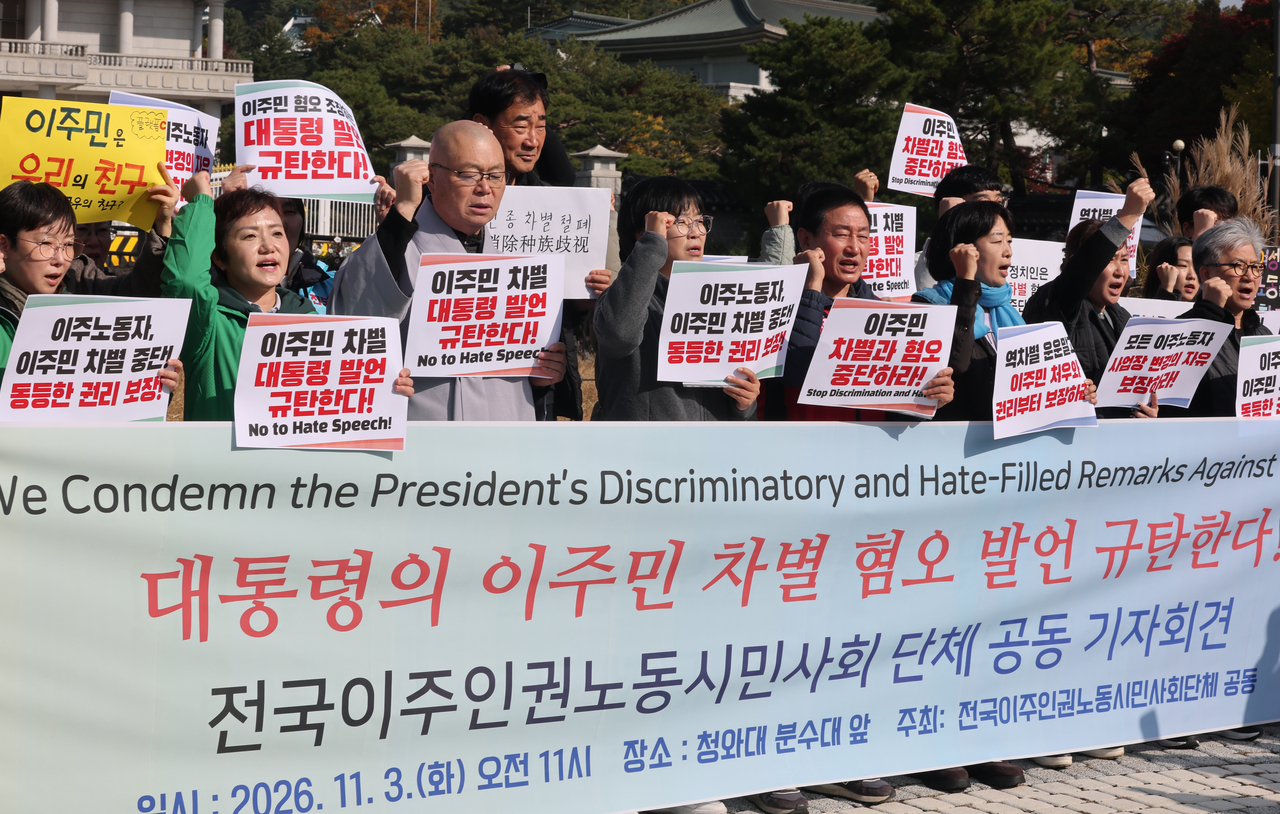
President Lee Jae Myung questioned the extent of such preferences in October 2026. He wrote that policies preventing discrimination against multicultural families were essential, but said they should not become excessive or result in what he called “adverse discrimination” against other families. Immigrant workers’ rights groups protested his comments on November 3.
A national survey of multicultural families found that the net higher-education enrollment rate among children from these households rose from about 41 percent in 2021 to nearly 62 percent in 2024, narrowing the gap with the national rate by more than half. About two-thirds of surveyed households reported monthly income of at least 3 million won ($2,255). At the same time, 13 percent of marriage immigrants and naturalized citizens surveyed said they had experienced discrimination.
Lee Jae-ho, an attorney at Migrant Center Friend, said support addresses language and cultural barriers, limited access to information and discrimination—not only differences in income. He argued that eligibility should reflect each program’s purpose and that services could also reach migrants facing similar barriers who fall outside existing family categories. Chang Woo-shim, a social welfare professor at U1 University, said families’ needs change as parents settle in Korea and children move toward further education or work.