
China’s central bank issued revised rules for yuan deposit and lending rates on November 27, 2026, the first major overhaul in 26 years. Banks and borrowers will be able to negotiate overdue interest on loans taken out after March 21, 2027. Existing mortgages, consumer loans and business loans will keep their current contract terms.
How overdue interest will be set
Under the previous rules, the interest rate on an overdue loan had to be 30% to 50% higher than the contract rate. Many banks used the full 50% increase. The higher the original rate, the larger the penalty in percentage-point terms.
The revised rules remove that mandatory range. The bank and borrower can agree on the penalty rate, how to calculate the interest and whether to allow a repayment grace period. They must record the agreed terms in the loan contract and comply with central bank requirements.
CCTV reported that the central bank would guide lenders toward reasonable increases over contract rates. The report said penalty rates were expected to fall overall, not that every new borrower would pay less.
Daily interest moves to a 365-day basis
For both deposits and loans, banks will calculate the daily interest rate by dividing the annual rate by 365 rather than 360. CCTV said most customers would notice little difference in routine transactions. The change is more likely to be noticeable for large deposits or very short-term loans where interest is calculated by the day.
Limits on deposit offers
The rules identify three prohibited ways of attracting deposits:
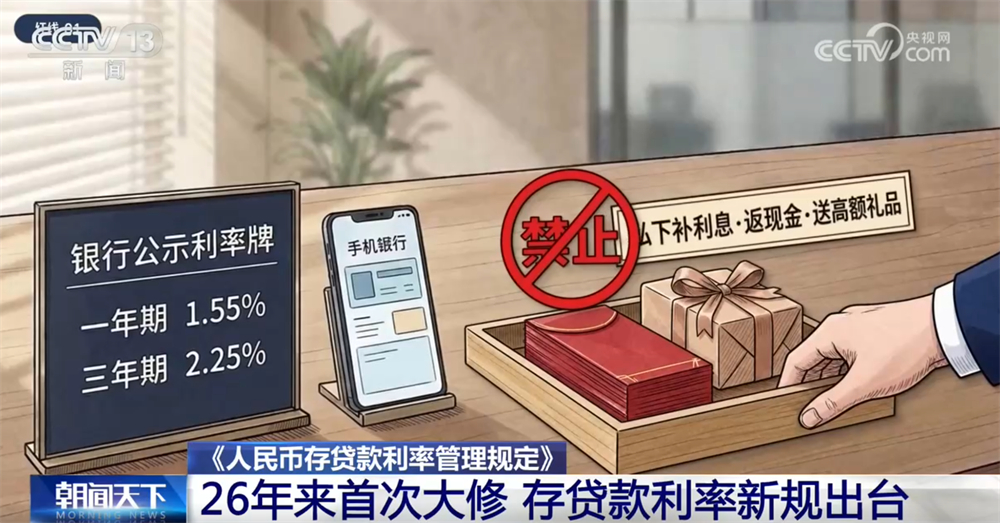
- Offering undisclosed extra interest, cash rebates or high-value gifts on top of rates posted at branches or in mobile banking apps.
- Offering rates above the ceiling set under the industry’s self-regulatory framework.
- Requiring a customer to take out a loan to qualify for a higher deposit rate.
CCTV advised depositors to rely on the posted rate, noting that verbal promises of extra benefits are not protected.