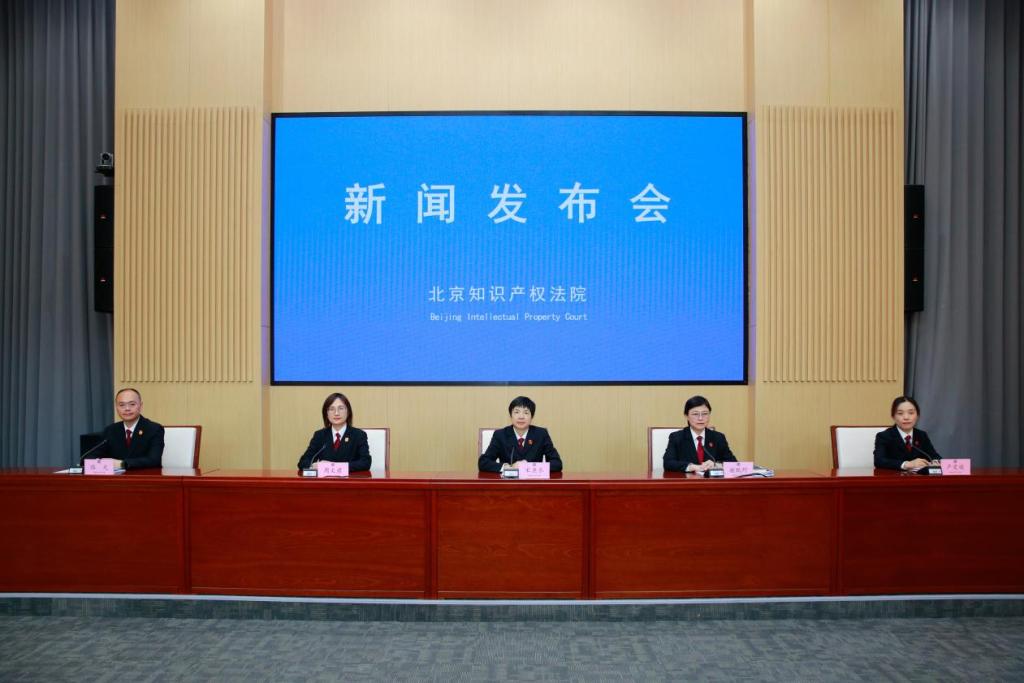
Beijing Intellectual Property Court said on November 11, 2026, that it had accepted 382 drug patent linkage cases over five years and concluded 369 of them. The figures were released at a briefing on pharmaceutical patent litigation, according to The Paper’s report.
China introduced its drug patent linkage system in June 2021 to address patent disputes before generic medicines reach the market. Beijing Intellectual Property Court has centralized first-instance jurisdiction over these cases nationwide. Vice-president Song Yushui said 358 of the cases accepted were civil and 24 were administrative; more than 90% involved foreign parties.
Under the system, a generic manufacturer may declare in its marketing application that a listed patent is invalid or will not be infringed. If the originator company files suit within 45 days, the drug regulator places the generic application under a time-limited approval pause while the dispute is considered.
Song said the court had shortened the average first-instance handling time for drug patent linkage cases to 101 days in 2025. More than 80% of such cases have been concluded within five months, the court reported. It aims to complete both instances of litigation within the nine-month waiting period applicable to chemical generic drug registration applications.
The court also released cases illustrating the limits of patent linkage claims. In a palbociclib case, it dismissed an originator company’s suit because a patent registered for capsules could not be treated as a patent registered for the generic applicant’s tablets. In a vonoprazan fumarate tablet case, the court found that a generic applicant had withheld necessary technical evidence without justification and ruled that its technical solution fell within the patent’s protection scope.
Other rulings addressed what happens when the national intellectual property authority has invalidated a patent, which technical version should be assessed if a generic applicant changes its proposal during review, and how Markush claims—claims covering groups of chemically related compounds—should be evaluated. The court also described using technical investigators and other specialists to examine complex pharmaceutical evidence.
Judge Lu Aiyuan said patent-validity disputes accounted for about 60% of the pharmaceutical patent administrative cases concluded over the past five years; 60.9% involved examination of inventive step. Those figures describe the court’s caseload, not all pharmaceutical patent disputes in China.
Source: m.thepaper.cn (originally published 2026-11-11 16:21 UTC+8)