China’s Ministry of Natural Resources has accepted a sea-use application for a section of the Guangdong Beibu Gulf water-transfer project and published its sea-use assessment report for public comment. As reported on November 20, 2026, the comment period runs from November 19 to December 2, 2026—10 working days. The application remains under review; the notice does not announce sea-use approval.
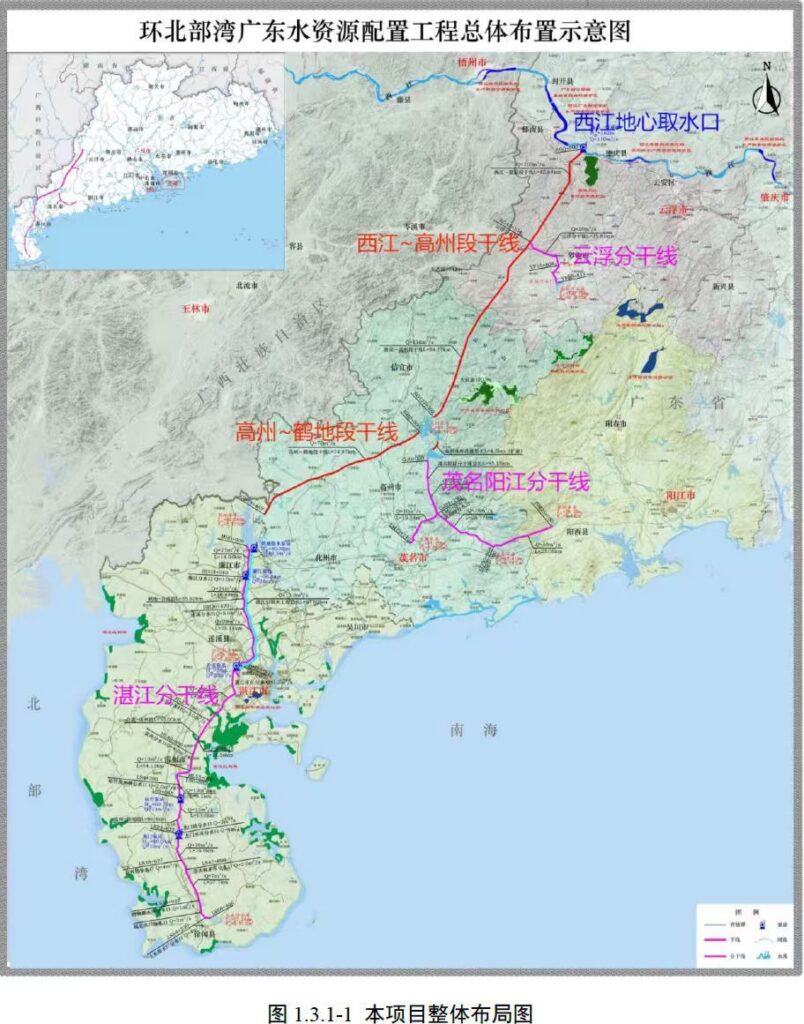
The project is intended to transfer water from the Xijiang River to parts of southwestern Guangdong, including Yunfu, Maoming, Yangjiang and Zhanjiang. The assessment report describes long-standing water shortages in the region, particularly on Zhanjiang’s Leizhou Peninsula. The scheme would draw water from the Xijiang, route it through Gaozhou and Hedi reservoirs, and then distribute it through branch pipelines. Its designed diversion flow is 110 cubic metres per second.
The sea-use application concerns part of the Zhanjiang branch where a pipeline would cross the Chengyue River in Suixi County. The crossing is about 774 metres long, including approximately 480 metres classified as a sea-use section, and would be built using pipe jacking. The project therefore requires a sea-use assessment and related procedures under China’s sea-area use rules.
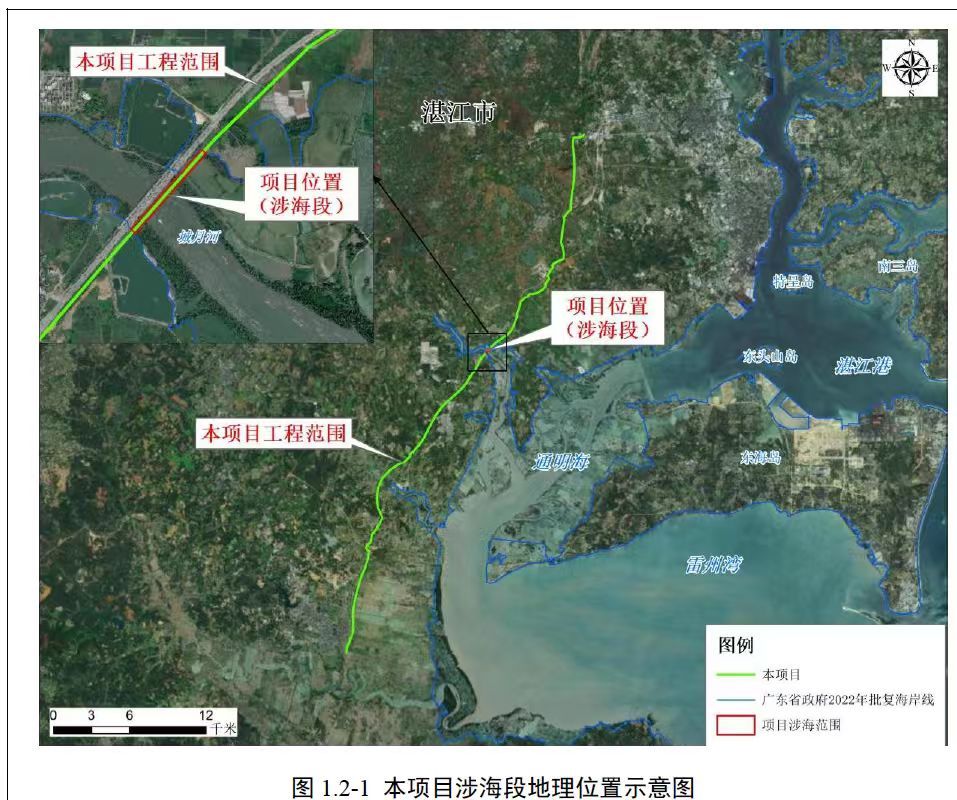
According to the assessment report, the sea-use section lies within the Guangdong Zhanjiang Mangrove Wetland of International Importance. It also lies within what was the experimental zone of the Guangdong Zhanjiang Mangrove National Nature Reserve before the reserve’s boundary adjustment, but outside the reserve’s adjusted boundaries, about 4.8 kilometres away. The report says the buried, trenchless crossing would not occupy mangroves and would have essentially no effect on the wetland’s ecological functions. Those are the report’s conclusions, not findings of an announced approval decision.
The pipeline has a design life of 100 years, while the project seeks sea-use rights for 50 years, according to the report.