South Africa’s Western Cape High Court set aside the report underpinning impeachment proceedings against President Cyril Ramaphosa over the theft of $580,000 (£443,000) from his Phala Phala game farm in Limpopo province, the BBC reported on 25 November 2026. The ruling removed the basis for the proceedings, but opposition parties said they intended to challenge it.
The court found that the independent panel appointed by Parliament in 2022 had misunderstood its task. Judge Nolwazi Mabindla-Boqwana said the panel had gone beyond its authority and made “several material errors of law”. The court set aside the report “in its entirety” and declared Parliament’s subsequent actions on the report unlawful.
The theft took place in 2020. The US dollar bills were allegedly hidden in a sofa at the farm. The case became public in 2022, when former intelligence chief Arthur Fraser, an ally of former President Jacob Zuma, gave police a dossier accusing Ramaphosa of concealing the theft from police and tax authorities. Ramaphosa acknowledged the robbery but denied wrongdoing, saying the money came from a legitimate sale of buffalo by his livestock business. Two people were found guilty of the theft earlier in November 2026.
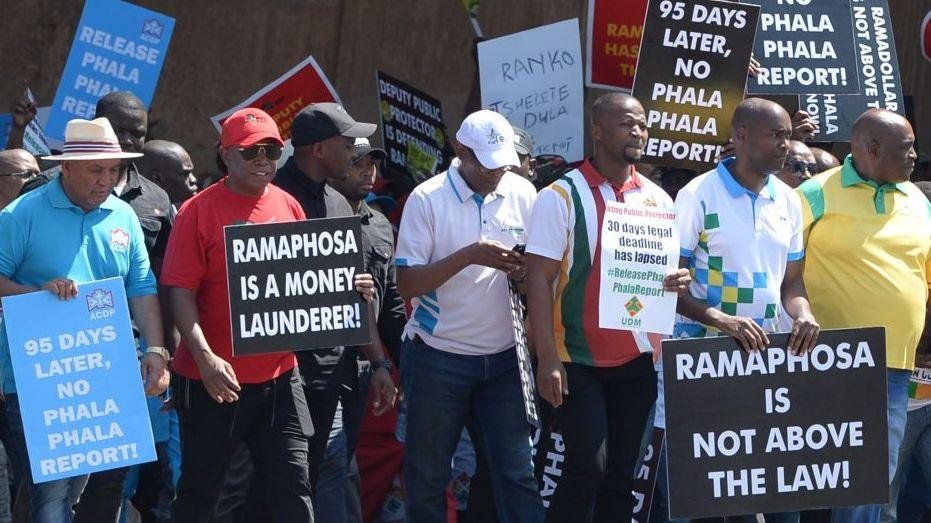
Several investigations cleared Ramaphosa of wrongdoing. The parliamentary panel, however, found “substantial doubt about the legitimacy of the source of the currency that was stolen” and concluded that he had a case to answer over possible serious misconduct. Ramaphosa initially challenged the report in court, then withdrew his application after Parliament voted against adopting its findings.
He renewed his challenge in May 2026 after the Constitutional Court ruled that Parliament had acted unconstitutionally by blocking impeachment proceedings. It ordered Parliament to refer the report to an impeachment committee. Ramaphosa argued that the panel had misunderstood its mandate, misjudged the evidence and misinterpreted the four charges against him.
If Parliament successfully challenges the High Court ruling, the committee could examine the charges and recommend whether to impeach Ramaphosa. Removing him from office would require a two-thirds majority in Parliament. His party, the African National Congress, held enough seats to block removal. Ramaphosa was the first president to face impeachment proceedings under the rules introduced in 2018.