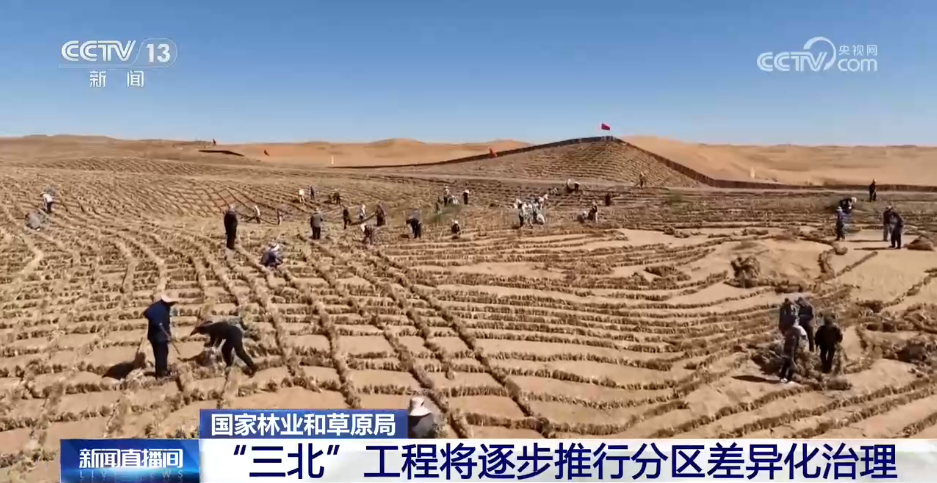
China’s Three-North program will organize planting, tending, management and restoration work around 14 zones to account for differences in water availability, temperature and terrain. The National Forestry and Grassland Administration said the aim was to give the quality and benefits of the work as much weight as the area it covers, CCTV reported on November 27, 2026.
The administration used counties as the planning units to align the zones with 68 priority projects in the program’s sixth phase. The zones fall into three groups:
- East (four zones): the Horqin Sandy Land, including the Songnen Plain; the Hunshandake Sandy Land, including the Xilingol Grassland; the sandy grasslands of Hulunbuir; and the Yanshan–Taihang mountain region.
- Central (four zones): the central and western Yinshan Mountains, including the Hetao Plain; the Kubuqi Desert and Mu Us Sandy Land; the Loess Plateau; and the Helan–Liupan mountain region.
- West (six zones): the Tengger and Badain Jaran deserts; the Hexi Corridor; the Qaidam Basin, including the Gonghe Basin; Qinghai’s alpine grasslands; the Junggar Basin; and the Taklamakan Desert.
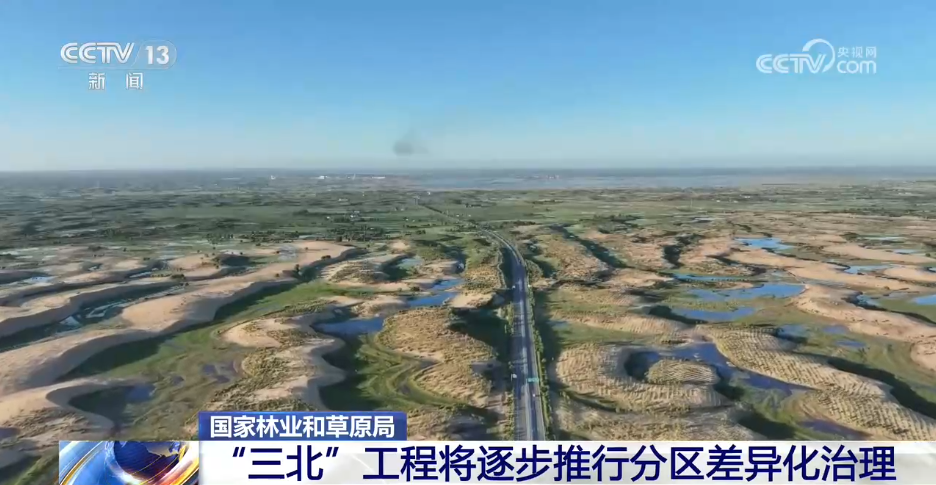
The program will also support grassland improvement to combat desertification. Construction of an initial 10 ecological ranches is scheduled to begin in 2027 in areas including Xinjiang and Inner Mongolia.
According to figures cited in the report, the program completed work on more than 80 million mu annually in the three years since its intensified campaign began. More than half of the sixth phase’s planned work was complete, with more than half of the planning period elapsed.
The central government allocated 27.7 billion yuan in 2026. The program carried out 328 priority projects that year and, by the time of the report, had completed work on 68.74 million mu against an annual target of 74.48 million mu.