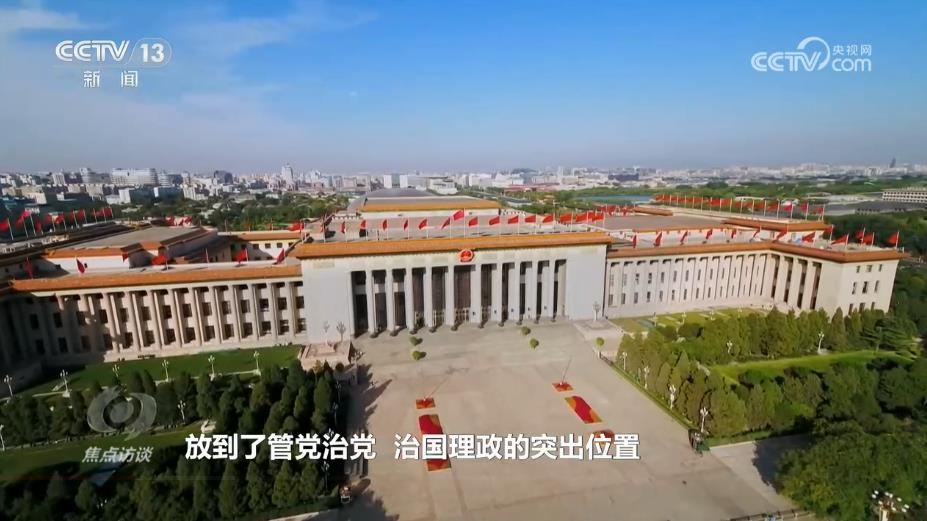
The Communist Party of China’s 20th Central Committee adopted a decision at its fifth plenary session directing Party bodies to assess candidates for office on their record in the job and under pressure, rather than relying on declarations or written evaluations alone. The decision also calls for clearer channels for grassroots organizations to report local conditions to higher Party bodies.
The directives are part of a broader decision on internal Party governance. In a November 28, 2026, report on the decision, CCTV’s Focus Interview said the Party had 101.286 million members, 3,202 local Party committees and 5.431 million grassroots organizations at the end of 2025.

How officials are chosen and trained
The decision sets out six personnel priorities: establishing criteria for appointments, matching candidates to posts, guiding how officials judge their achievements, developing their skills, improving the training and selection of younger officials, and strengthening supervision.
It calls for appointing officials who show loyalty to the Party, take responsibility, deliver results and act with integrity. It directs Party bodies not to appoint candidates who avoid difficult work and to remove those who feign compliance or use public office for personal gain. Selection bodies are to start with what a job requires, look beyond a candidate’s immediate workplace when assessing performance, and avoid lowering standards to fill a post.
The decision discourages both repeated changes of personnel in the same post and frequent transfers of the same official. Song Wei, a professor at Tsinghua University’s School of Marxism, said such practices had disrupted policy implementation and the development of officials. For younger officials, the decision calls for political training and makes frontline work at the grassroots level a foundation for gaining experience.
The document separately reaffirms the Party’s role in managing talent. It calls for action against academic fraud and plagiarism, excessive emphasis on prestigious titles, promotion by seniority, and the influence of academic cliques.
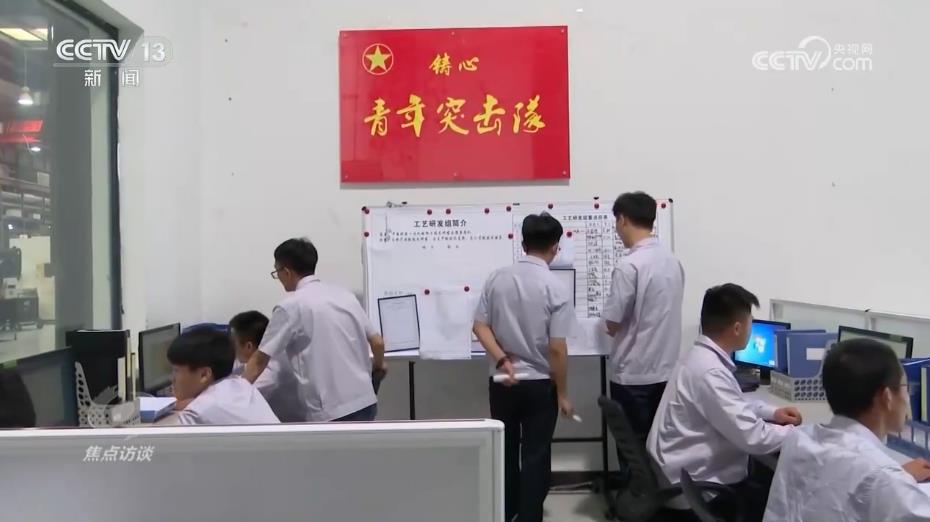
How Party organizations are to work together
The decision assigns distinct roles to Party organizations in central Party and state institutions, local Party committees and grassroots organizations. Central bodies are expected to set an example in carrying out Central Committee decisions, while local committees convey those decisions and grassroots bodies put them into practice. Cui Weihang, director of the Academy of Marxism at the Chinese Academy of Social Sciences, cited villages affected by depopulation, very large communities and border areas as examples of places singled out for attention.
In emerging sectors, the decision calls for clarifying which Party bodies are responsible for different types of organizations and extending the reach of Party branches and their work. Zhao Shumei, dean of Renmin University of China’s School of Chinese Communist Party History and Party Building, said the document draws on recent experience with internet platforms, workers in new forms of employment and the placement of some enterprise Party organizations under higher-level management.
The decision calls for coordination in both directions: higher bodies are to communicate directives and see that they are implemented, grassroots bodies are to report conditions upward, and organizations at different levels are to work together to resolve problems. Zhao said this was the first time the Party had explicitly set out what those links should cover, including how Party bodies responsible for a locality should work with those that report through a separate chain of command.